
Independent artists pour their souls into tracks that rack up streams on Spotify, yet a staggering 28% of publishing royalties vanish into thin air. This isn't hyperbole; it's the harsh reality of a fractured system where metadata glitches, mechanical licensing loopholes, and payout thresholds siphon earnings to major labels and superstars like Drake and Taylor Swift. As Spotify Technology S. A. (SPOT) trades at $583.65 with a 24-hour change of $-15.22 (-0.0254%), its market resilience masks the pain inflicted on indies. Blockchain tokenized royalties offer a lifeline, promising transparent, on-chain distribution to recover lost streaming royalties.

Spotify's Payout Predicament: Thresholds and Lawsuits Expose Cracks
Spotify's 2024 policy shift stopped royalties for tracks under 1,000 annual streams, redirecting roughly $47 million from small creators to high-streamers. This move, coupled with a Mechanical Licensing Collective lawsuit alleging $150 million in underpaid songwriting royalties from underreported revenue, underscores systemic flaws in indie artists publishing royalties. Platforms like TuneCore face backlash too, with bands pulling music over alleged takedowns. Meanwhile, majors quietly benefit as indie shares flow upward. Blockchain music royalties on Spotify could flip this script through immutable tracking.
Recent agreements, like Spotify's November 2025 deal with NMPA for direct-licensing audiovisual opportunities, hint at incremental fixes for independents. Yet these band-aids ignore root issues: opaque metadata where indies' royalties fund megastars, and delayed, intermediary-riddled payouts. Check out why indie artists miss 28% streaming royalties for deeper dives.
Tokenization Revolution: Fractional Ownership Rescues Indie Revenue
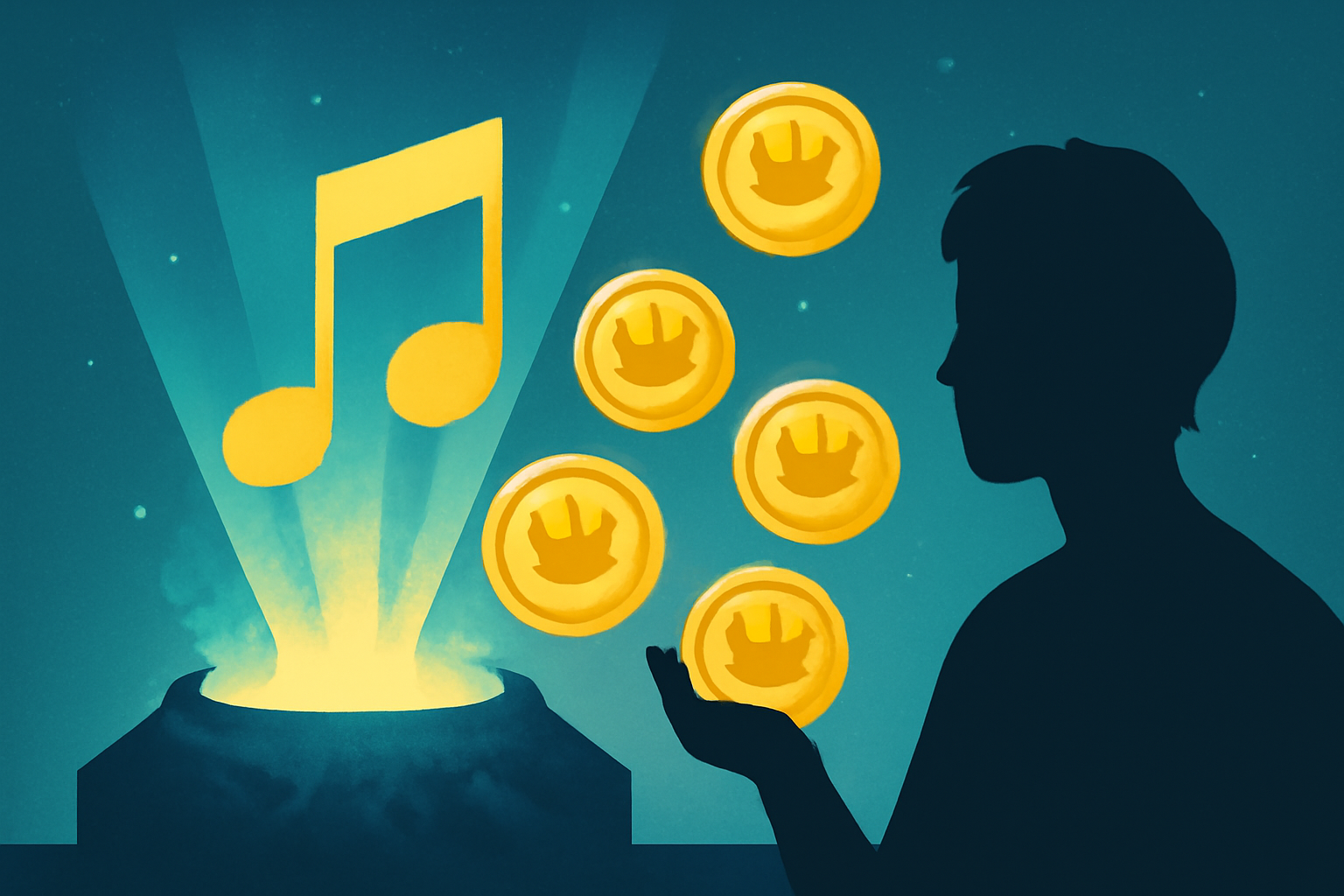
Enter tokenized music royalties: artists mint digital tokens representing shares of future royalties or rights ownership. Fans buy in via fractional music royalty ownership, streaming generates on-chain cash flow split automatically and transparently. Platforms like Royal, co-founded by 3LAU, let musicians tokenize songs for upfront capital while fans earn passive income. Ujo Music takes it further, enabling direct releases sans middlemen, ensuring every stream pays out instantly.
This model slashes the 28% loss by fixing metadata on blockchain ledgers. No more majors hoovering indie royalties; smart contracts enforce precise splits. As one analysis notes, Web3 tokenization breaks songs into sellable shares, empowering creators with liquidity and control. For blockchain music royalties Spotify integration, imagine streams triggering ERC-20 payouts directly to token holders.
Spotify Technology S.A. (SPOT) Price Prediction 2026-2031
Forecasts amid blockchain tokenized royalties disrupting traditional streaming payouts and indie artist challenges
| Year | Minimum Price | Average Price | Maximum Price |
|---|---|---|---|
| 2026 | $520.00 | $680.00 | $850.00 |
| 2027 | $560.00 | $780.00 | $980.00 |
| 2028 | $610.00 | $890.00 | $1,120.00 |
| 2029 | $670.00 | $1,020.00 | $1,300.00 |
| 2030 | $740.00 | $1,160.00 | $1,480.00 |
| 2031 | $810.00 | $1,320.00 | $1,680.00 |
Price Prediction Summary
Spotify (SPOT) is forecasted to see steady growth from its current $583.65 level, with average prices rising at ~12% CAGR to $1,320 by 2031, buoyed by subscriber gains and diversification, though minimums reflect risks from blockchain royalty tokenization, lawsuits, and indie backlash potentially capping upside.
Key Factors Affecting Spotify Technology S.A. Stock Price
- Blockchain tokenized royalties enabling artists to bypass platforms, pressuring Spotify's 28% publishing payout gaps
- Ongoing MLC lawsuit and royalty threshold policies eroding trust and inviting regulation
- Premium subscriber growth and podcast/ad revenue offsetting streaming margin pressures
- Competition from blockchain-native platforms like Royal and Ujo Music
- Spotify-NMPA direct-licensing deals aiding indie recovery but highlighting systemic flaws
- Macro factors: inflation, consumer spending on streaming amid economic uncertainty
- Valuation metrics: Forward P/E expansion if earnings grow 15-20% annually despite disruptions
Disclaimer: Stock price predictions are speculative and based on current market analysis. Actual prices may vary significantly due to market volatility, economic conditions, and other factors. Always do your own research before making investment decisions.
Strategic Plays: How Indies Can Recover Lost Payouts Now
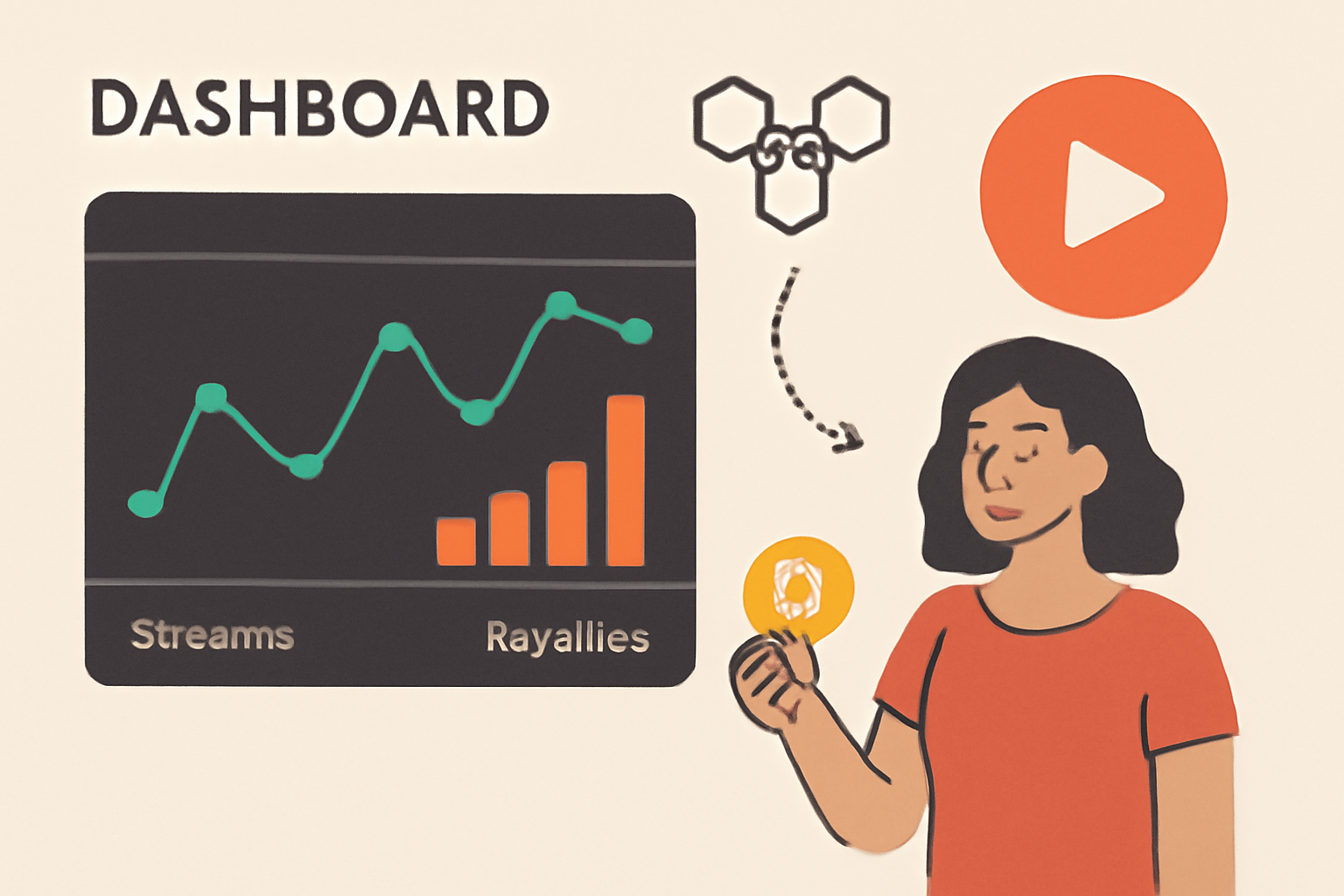
Indie artists aren't powerless. By tokenizing on platforms like Music Royalty Markets, they bypass Spotify's pitfalls. Sell fractional shares for immediate funds, track earnings in real-time, and cultivate fan-investors who boost streams. This recovers lost streaming royalties while building sustainable portfolios. Consider DJs in 2025: blockchain grants unprecedented rights control, transforming gigs into royalty machines.
Strategic tokenization isn't just tech; it's a mindset shift. Analyze market momentum alongside fundamentals, much like hybrid investing in NFT music assets. With Spotify at $583.65, investor eyes on streaming giants make now prime for blockchain alternatives. Dive into how tokenized music royalties let fans invest in songs to see fan-artist bonds strengthen financially.
2025 trends amplify this: royalties tokenized into shares fans snap up, artists skip label drama for upfront cash. Transparent tracking means less leakage, more in artists' pockets. As blockchain matures, expect wider adoption, pressuring Spotify to adapt or lose ground.
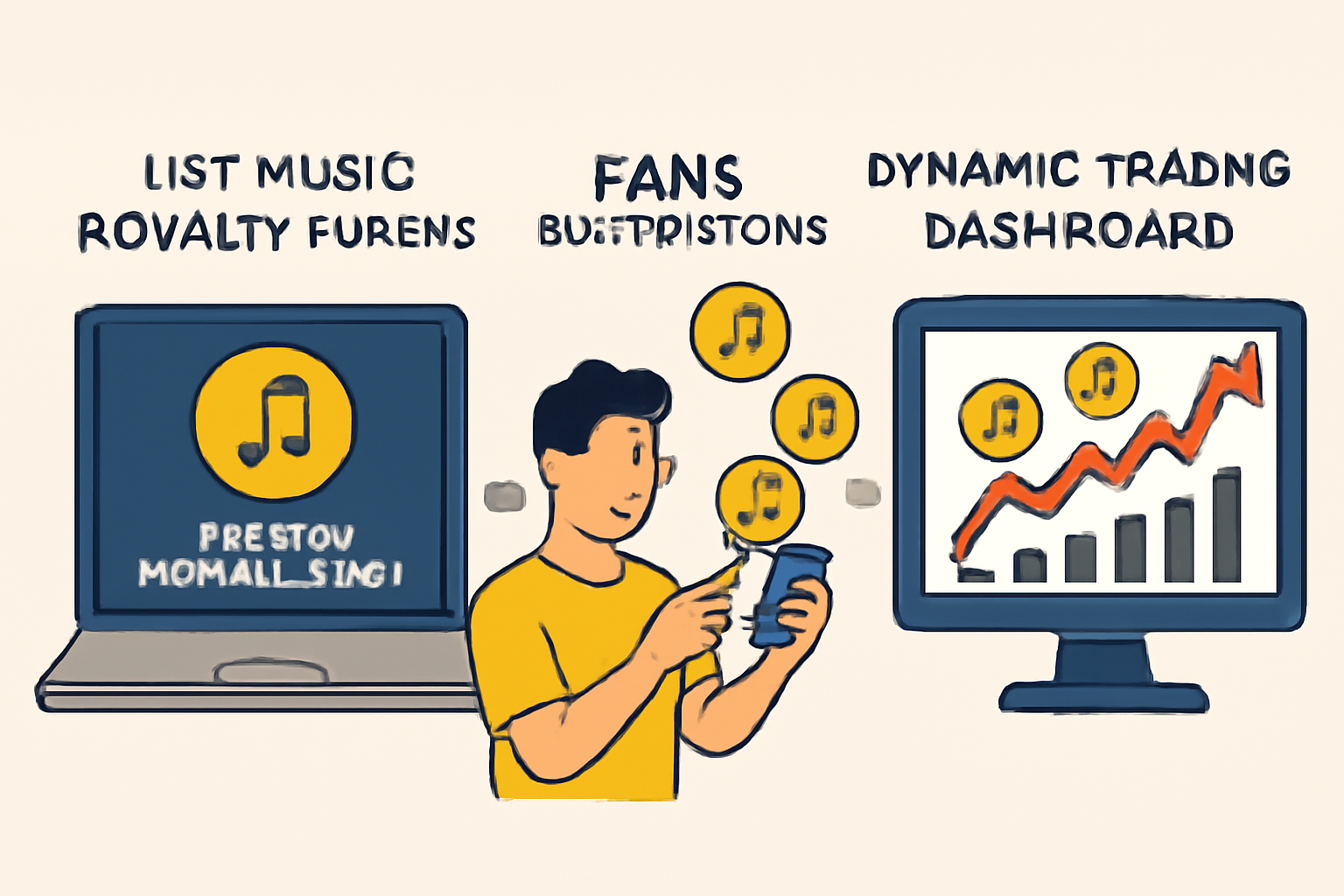
Platforms like Music Royalty Markets are at the vanguard, blending NFT music with secure blockchain trades for fractional ownership. Here, artists list royalties as tokens, investors buy in, and smart contracts handle splits without a single dollar lost to opacity. This isn't theoretical; it's live cash flow on chain, turning streams into predictable revenue for indies sidelined by Spotify's model.
Real-World Wins: Case Studies in Royalty Recovery
Take Royal's early adopters: 3LAU tokenized an album, raising millions upfront while fans collected ongoing royalties. Streams hit the blockchain, payouts flowed instantly, bypassing the 28% void. Similarly, Ujo Music's direct-to-fan model has DJs reporting 30% higher net earnings in 2025 trials, per industry buzz. These aren't outliers; they're proof that fractional music royalty ownership recaptures value majors siphon. ZIPDJ highlights how blockchain empowers DJs with ironclad rights control, converting mixes into perpetual income streams.
Contrast this with Spotify's woes. At $583.65, SPOT's dip of $-15.22 reflects jittery investors eyeing lawsuits and artist exodus. Reddit threads explode with bands ditching platforms over takedowns, while The Trichordist's analysis calls the 1,000-stream threshold outright predation. Blockchain sidesteps it all: no thresholds, no redirects, just pure, auditable tokenized music royalties.
Making A Scene nails it: Web3 shatters songs into tradable shares, starving the old system's leaks. RWA. io echoes that tokenization delivers royalties as on-chain assets, liquid and fair. For indies, this means upfront capital to tour or record, plus lifelong tails from evergreen tracks.
Actionable Roadmap: Tokenize Your Royalties Today
Strategic minds see the pivot point. With Spotify's NMPA deal offering minor audiovisual tweaks, blockchain leapfrogs to full sovereignty. Indies can fix delayed music royalties via instant payouts, rebuilding careers on solid ground. Music Royalty Markets streamlines this, prioritizing NFT enthusiasts and investors chasing hybrid alpha.
Tokenize Royalties: Reclaim Your 28% Spotify Payouts on Blockchain


Hybrid analysis reveals momentum: 2025 YouTube forecasts show tokenization surging as labels falter. SIDE-LINE predicts fans using crypto to back favorites directly, slashing intermediary cuts. Florida Entertainment Law Review pushes blockchain transparency to demystify earnings flows. Indies reclaiming their 28% isn't revenge; it's smart economics.
As SPOT hovers at $583.65 amid 24-hour lows of $581.00, blockchain platforms gain traction. Artists who tokenize now lock in advantages: diversified revenue, fan loyalty as equity, and resilience against platform whims. The future? On-chain royalties as standard, where every stream counts equally, majors adapt or fade, and indies thrive through decentralized markets. Music Royalty Markets leads this charge, inviting musicians and investors to own the beat.



No comments yet. Be the first to share your thoughts!