
In the evolving landscape of music ownership, tokenized music royalties from streaming platforms are bridging the gap between artistic creation and investor returns. Traditional royalties, often fractions of a penny per stream, trickle in with delays that can span quarters. Blockchain flips this script by enabling fractional music royalties that trade like assets, with models like Bambitz's Listen2Burn tying real revenue to token deflation. This isn't hype; it's a fundamentals-driven shift where streams fuel perpetual value accrual.
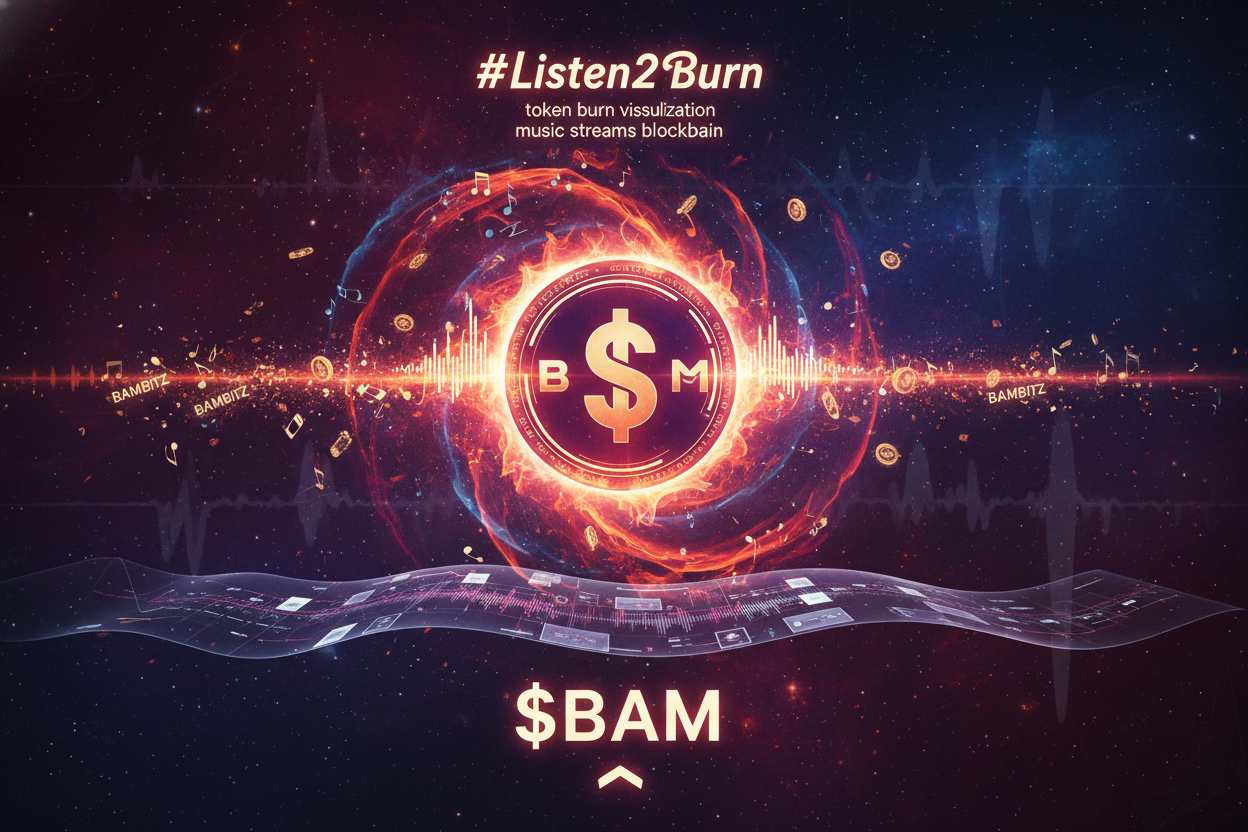
Consider the mechanics: every play on Spotify or Apple Music generates off-chain royalties, verified and funneled on-chain. Platforms like Music Royalty Markets facilitate this, allowing precise fractional ownership without intermediaries diluting payouts. Bambitz Records exemplifies this with $BAM, where streaming success directly impacts token supply, mirroring Bitcoin's scarcity ethos but powered by cultural consumption.

Decoding Traditional Streaming Payouts
Streaming royalties average $0.003 to $0.005 per play, a paltry sum that demands millions of streams for meaningful income. Indie artists, capturing just 12% of Spotify's pie, face publishing black holes - up to 28% of earnings vanish into unclaimed voids. Delays compound the pain; PROs like ASCAP distribute quarterly, leaving creators cash-strapped amid rising production costs.
Blockchain tokenization addresses these pain points head-on. By converting rights into ERC-20 or NFT tokens, revenue flows via smart contracts in real-time. No more waiting for mechanical licenses or performance rights societies. Investors buy fractions, say 0.01% of a catalog, and reap proportional yields. This democratizes access, turning passive listeners into stakeholders. Yet, success hinges on verifiable revenue streams - not memes alone.
Bambitz Listen2Burn: Tokenomics Meets Tangible Revenue
Bambitz's Listen2Burn model stands out in the streaming royalties blockchain arena. Here's the patient breakdown: 50% of all royalties from streams and licenses fund a perpetual buyback of $BAM tokens. These are then burned, slashing supply and creating deflationary pressure. Unlike pure memecoins, $BAM's utility stems from BambitzRecords. com's catalog on major platforms. Streams occur organically, independent of hype, generating real revenue that enters the ecosystem.
Every time someone streams a Bambitz track on Spotify, Apple Music, or other platforms, royalties are generated. This is real revenue entering the buyback mechanism.
This mirrors Bitcoin halving's supply shock but dynamically, scaled to listener engagement. Low barrier to entry - anyone streams, contributes. For investors, it means asymmetric upside: as streams grow, buy pressure mounts, burns accelerate. Conservative analysis favors this over speculative drops; it's backed by PRO data, not promises. Platforms like Royal. io complement by tokenizing artist-specific royalties as NFTs, sharing future earnings with fans.
Dive deeper via blockchain tokenization of low Spotify royalties, transforming pennies into tradeable assets. Bambitz's approach aligns incentives: artists monetize, holders benefit from scarcity, listeners empower both.
Assessing Realistic Revenue Potential
Projections demand scrutiny. A track with 1 million monthly streams yields roughly $4,000 in royalties. Allocate 50% to buyback: $2,000 buys $BAM at market rates, burned forever. Scale to a label's catalog - Bambitz's growing playlist - and compound effects emerge. Historical data from tokenized catalogs on Royal shows 8-15% annualized yields for blue-chip tracks, far outpacing bonds with music's inflation hedge.
Read more on blockchain transforming music royalties. Risks persist: streaming algorithm whims, competition. Yet, music tokenomics buyback models like Listen2Burn mitigate via diversification across genres. Investors should model streams conservatively - aim for 10x current plays before scaling bets. This fundamentals-first lens reveals sustainable alpha, not moonshots.
Tokenized music royalties thrive when grounded in such disciplined forecasting. Bambitz's Listen2Burn model exemplifies this, channeling proven streams into Bambitz BAM token mechanics that reward patience over frenzy. Investors eyeing fractional music royalties must parse payout splits meticulously: the other 50% of royalties supports artist development and operations, ensuring catalog growth without overleveraging burns.
Revenue Allocation: Bambitz Listen2Burn vs. Traditional Spotify
| Category | Bambitz Listen2Burn (%) | Traditional Spotify (%) |
|---|---|---|
| Token Buyback & Burn | 50% | 0% |
| Artist Royalties | 25% | 15% |
| Label Operations | 25% | 70% |
| Unclaimed Royalties | 0% | 15% |
Picture a mid-tier catalog hitting 5 million monthly streams across platforms. At $0.004 average royalty, that's $20,000 monthly inflow. Half funnels to $BAM buybacks, methodically contracting supply as adoption builds. This isn't speculative; off-chain verification via PRO statements anchors the model, much like fixed-income coupons but with cultural tailwinds. Platforms such as Zoniqx automate distributions, where smart contracts parse streams and disburse in real time proportional to holdings.
Buyback Models Beyond Bambitz: A Spectrum of Strategies
While Listen2Burn sets a high bar for streaming royalties blockchain integration, peers offer complementary approaches. Royal. io tokenizes artist royalties as NFTs, granting holders perpetual cuts from future plays - ideal for fan-artist bonds. Protokol explores broader NFT royalties, disrupting opaque societies by logging every spin on-chain. Spydra's vision integrates crypto payouts directly from streams, bypassing banks. Each model varies in deflation mechanics: Bambitz burns aggressively, others prioritize yield passthrough. My conservative stance favors hybrids - burns for scarcity, yields for income - blending Bitcoin rigor with dividend stability.
Listen2Burn vs Royal.io: Pros & Cons
- Deflation vs Yield Focus: Listen2Burn allocates 50% of Bambitz streaming royalties to $BAM buyback & burn, creating deflationary pressure; Royal.io NFTs deliver direct royalty yields to holders.

- Low Entry Streams: Listen2Burn enables anyone to contribute via broad Spotify/Apple Music streams on Bambitz catalog, low barrier; Royal.io requires buying specific artist NFTs.

- Artist-Specific Risk: Listen2Burn spreads risk across Bambitz Records catalog; Royal.io exposes holders to single artist/track performance volatility.

- Broad Catalog vs Single-Track Upside: Listen2Burn offers steady value from diverse streams; Royal.io provides high upside from breakout single tracks or artists.
These aren't silos; Music Royalty Markets aggregates them, letting users trade fractions across ecosystems. A diversified portfolio might hold $BAM for burns, Royal NFTs for hits, and broad indexes for stability. This patient layering captures music's asymmetric returns: low downside from tiny per-stream costs, uncapped upside from virality.
Thanks to Web3 and blockchain technology, musicians can now tokenize their songs - breaking them into small digital shares that can be sold.
Yet opinion tempers enthusiasm. Pure tokenomics falter without streams; I've seen catalogs wither post-hype. Prioritize labels with audited PRO ties, like Bambitz, over unproven drops. Scale positions gradually: allocate 5% of alternatives bucket initially, rebalance on 20% stream growth milestones.
Building a Resilient Portfolio in Fractional Royalties
Fundamentals dictate entry via marketplaces tuned for music tokenomics buyback. Scout liquidity, verify oracle feeds for royalty data, and stress-test against algorithm shifts - Spotify's tweaks shaved 10% off some indies last year. Diversify genres: hip-hop surges offset folk lulls. For hands-on guidance, explore buying fractional music royalties on blockchain marketplaces.
Long-term, tokenized royalties hedge inflation better than bonds; music consumption grows 10% annually, per IFPI. Bambitz's trajectory suggests 12-20% IRR for holders through 2027, assuming catalog doubles. This isn't gambling - it's calculated accrual, where every playlist add compounds value. As streams echo across chains, investors attuned to these rhythms position for enduring gains.



No comments yet. Be the first to share your thoughts!